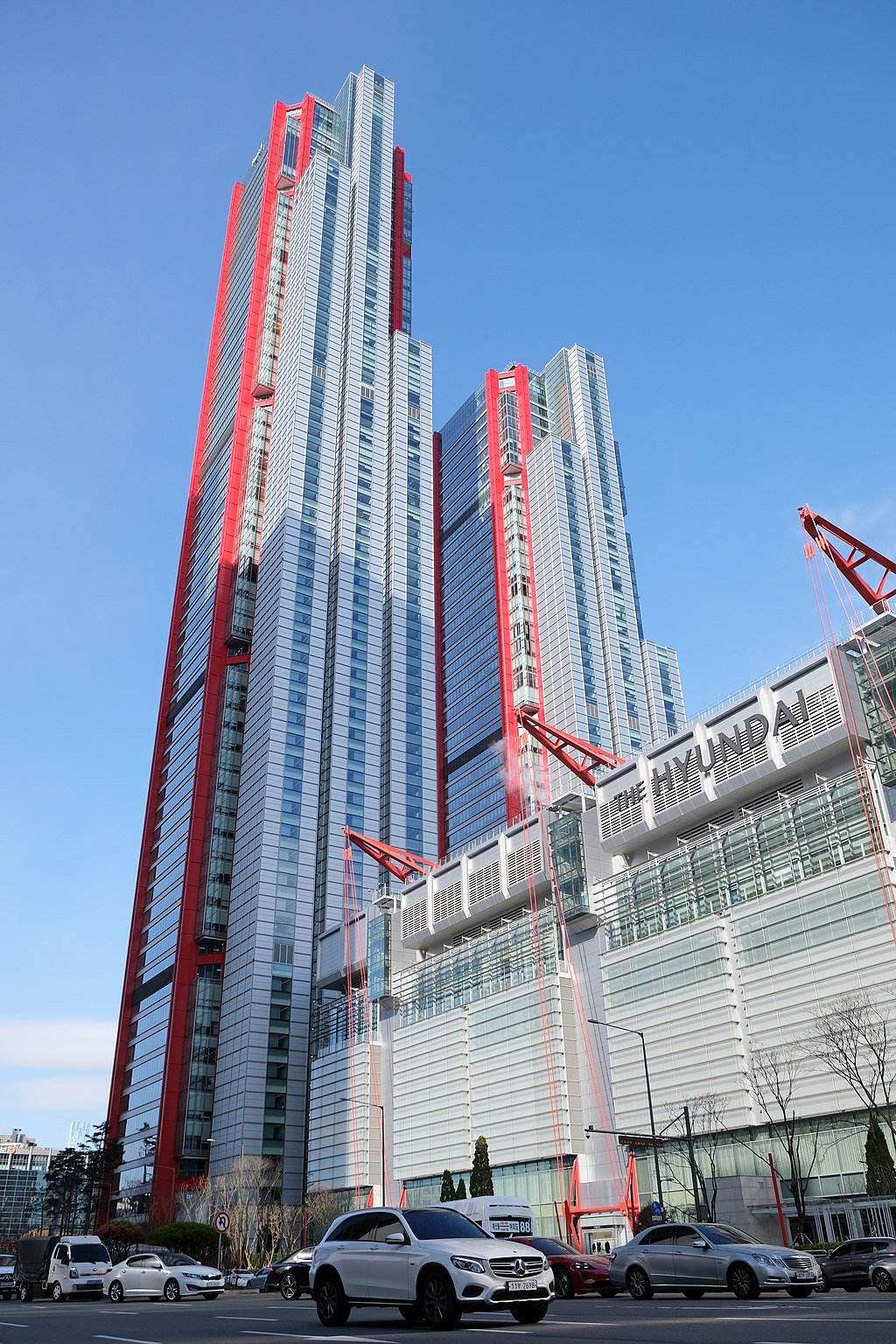
Parc.1, a mixed-use complex in Seoul, South Korea, exemplifies innovative architecture and green building practices. AirFixture's SoHo Fan Convectors provided a custom solution for perimeter heating and cooling, ensuring occupant comfort while meeting space constraints and sustainability goals.
PROJECT
Parc.1 is a landmark US$1.5 billion mixed-use development on Yeouido Island — Seoul's primary financial district and one of the city's three designated central business districts. Sixteen years in the making, the 629,047 m² (approximately 6.77 million SF) complex was designed by global firm RSHP alongside co-architects Samoo Architects & Engineers and Siaplan Architects and Planners.
The development comprises two supertall office towers — the tallest reaching 318 meters — a 326-room Fairmont Ambassador Seoul hotel, and The Hyundai Seoul, the largest retail center in South Korea. The complex was organized to integrate public transport, retail, commercial, and hospitality into a single urban hub, connected directly to Yeouido Station via underground pedestrian pathways.
The towers' exterior is defined by painted red steel columns and exposed mega-trusses — a signature RSHP expression — inspired by red columns symbolizing dignity and refinement in traditional Korean architecture. Parc.1 opened its towers and hotel in July 2020, with the retail center following in March 2021, and has since become one of Seoul's most recognized skyline landmarks.
PROJECT CHALLENGE
The scale and mixed-use complexity of Parc.1 created a highly specific perimeter HVAC challenge that standard overhead systems could not address. The towers feature floor-to-ceiling glass curtain walls- a core design intent that constrains the mechanical strategy. The raised access floor, installed to manage electrical and data cabling throughout the towers, had a finished floor height of just 150mm — leaving no usable depth for conventional underfloor air distribution to the perimeter.
The original air-only HVAC design proved insufficient for perimeter cooling. With nearly every office floor of both towers exposed to high solar gain through full-height glazing, the perimeter zones faced a thermal load that the central air system alone could not adequately manage — threatening occupant comfort and indoor air quality at the building's most desirable positions.
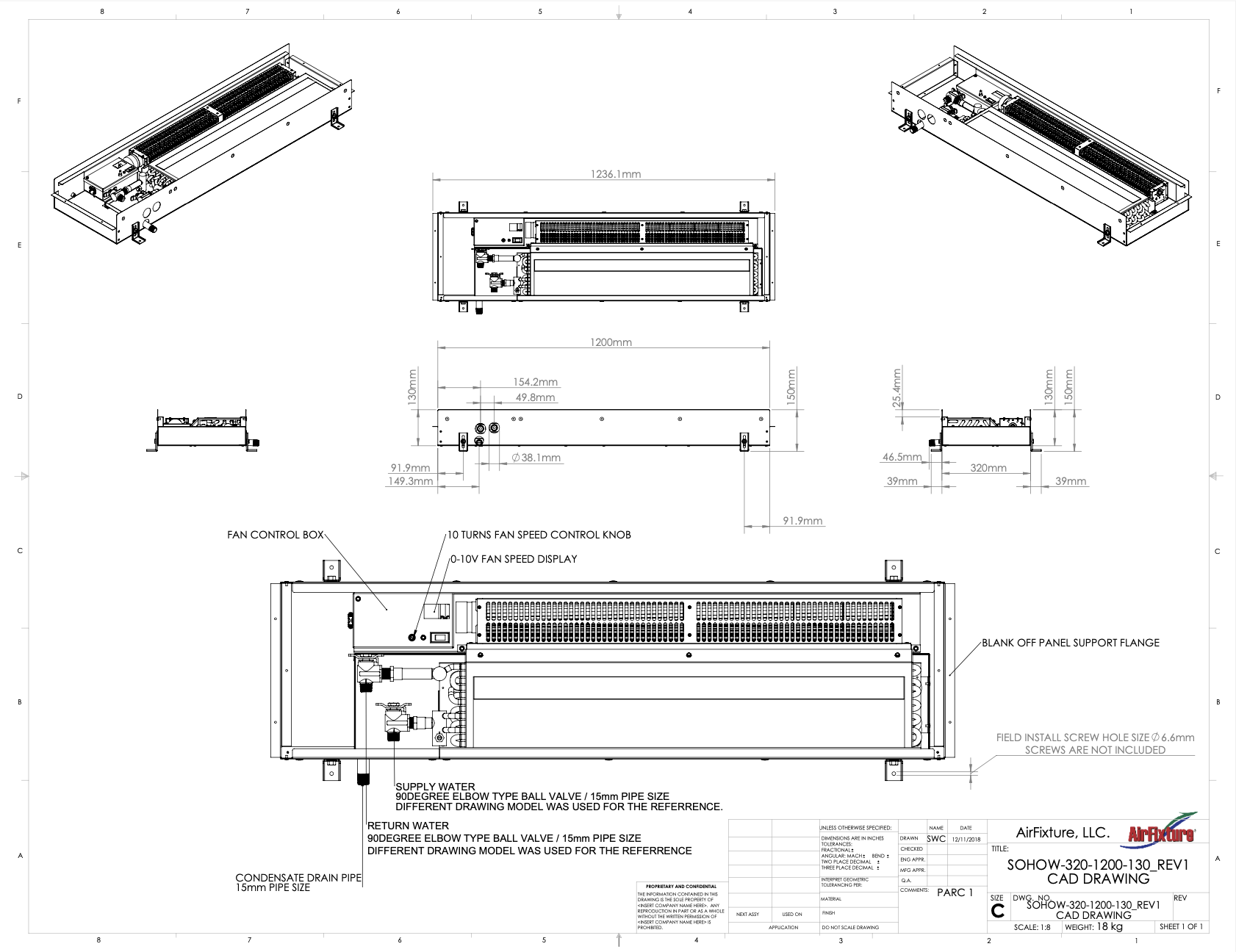
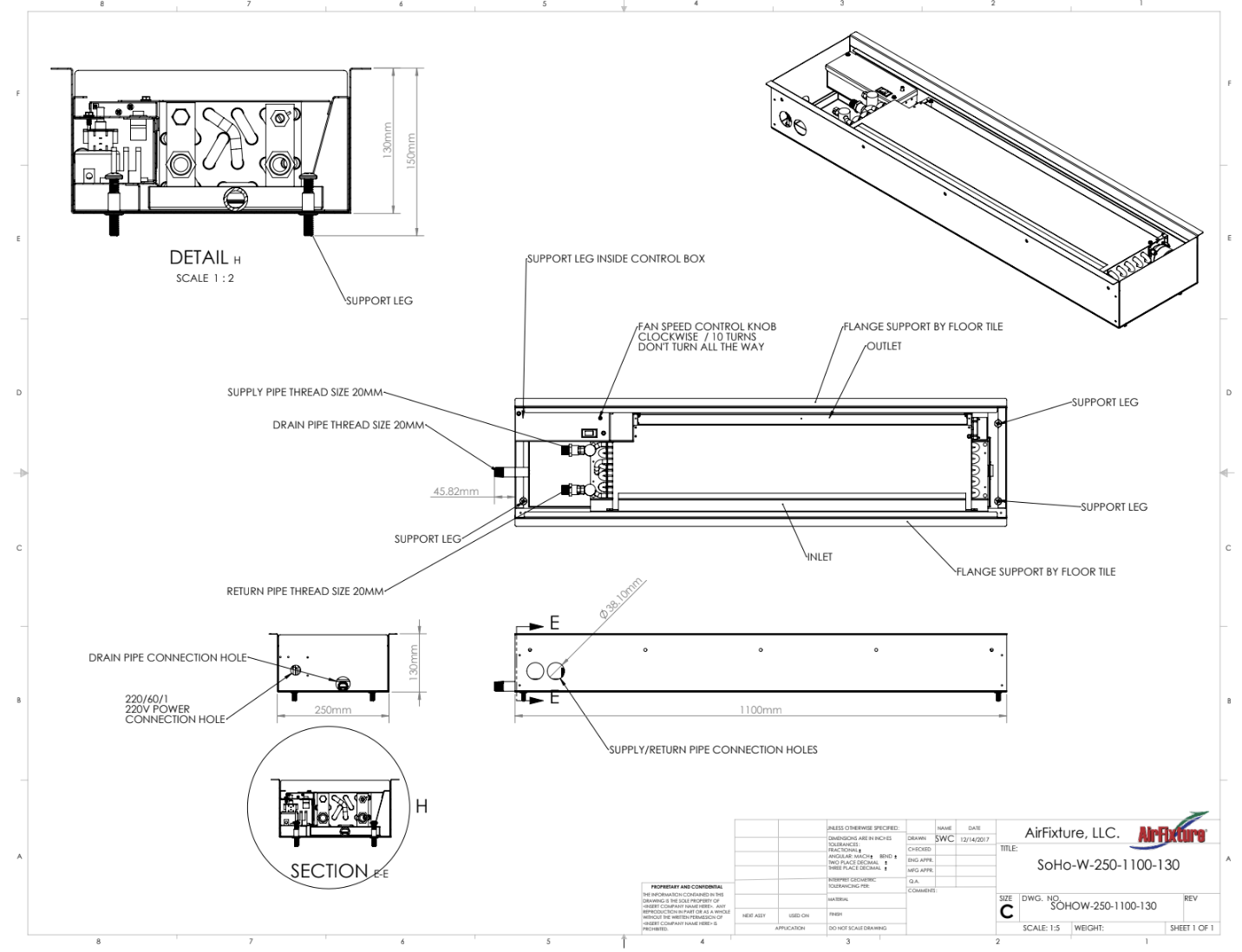
The client required a floor-mounted perimeter cooling solution with a profile low enough to fit within the 150mm finished floor height — a constraint that ruled out standard overhead fan coil units and most conventional perimeter heating and cooling products.
AIRFIXTURE SOLUTION
AirFixture proposed two complementary SoHo products to address the full range of perimeter conditioning needs across both towers.
SoHo-e Electric Fan Convectors were installed in the first-floor lobby perimeter areas of both towers, providing heating at the building entrances — high-traffic zones with significant infiltration exposure.
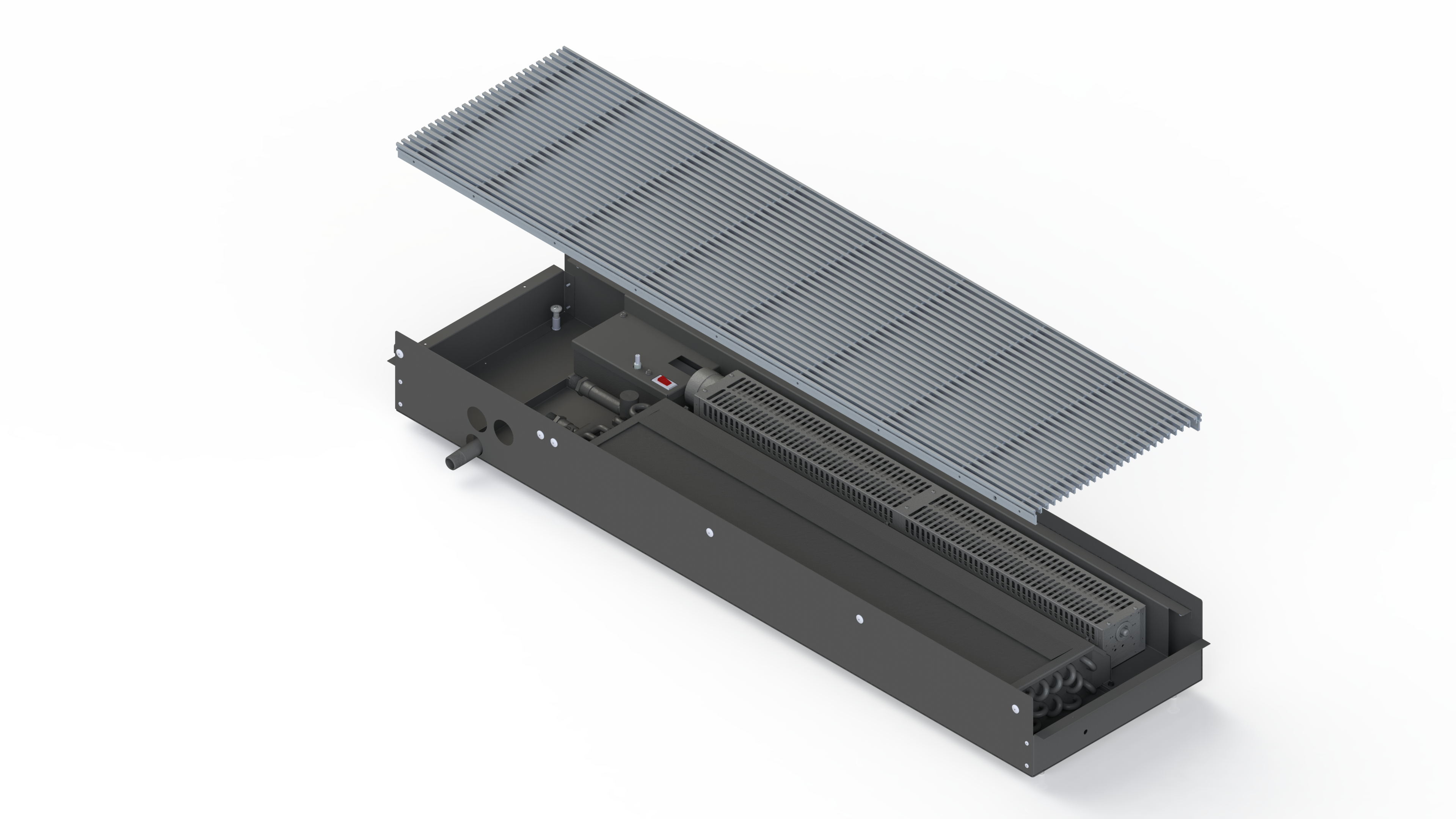
SoHo-w Hydronic Fan Convectors were installed on nearly every office floor of both towers — 52 to 60 units per floor — providing the perimeter heating and cooling capacity that the air-only system could not deliver.
The SoHo-w was selected for this application because of three specific performance characteristics:
Profile compatibility. The SoHo-w is designed for low-height raised-access floor and recessed perimeter trench installation, fitting within the 150mm floor depth constraint without modification.
Cooling capacity. As a hybrid water-and-air unit, the SoHo-w delivers significantly higher cooling capacity than air-only alternatives — directly addressing the perimeter load challenge created by the full-height curtain wall.
Quiet operation. The cross-flow fan design circulates air with minimal turbulence, maintaining occupant comfort without the drafts or noise associated with ceiling-mounted fan coil units.
All units were designed and produced at AirFixture's Kansas City facility. Cooling performance was independently tested at Korea Testing Certification (KTC) Institute to verify that the units met the project's required cooling capacity before specification. The SoHo-w units are ETL listed and fully certified to UL standards.
RESULTS
Parc.1 achieved G-SEED Grade 1 — the highest rating under Korea's Green Standard for Energy and Environmental Design, the national government-administered green building certification system equivalent in scope to LEED in the United States. The complex was the first building in Korea to receive this pre-certification at the Gold grade.
G-SEED and LEED are both green building certification systems, but they have some key differences and similarities in their relation to the U.S.:
Similarities:
- Both programs aim to promote sustainable building practices by providing a framework for assessing and certifying buildings based on their environmental performance.
- They share similar categories for evaluation, such as energy efficiency, water use, materials, and indoor environment quality.
- Both offer multiple certification levels (e.g., Certified, Silver, Gold, Platinum) based on the achieved score.
G-SEED and LEED offer complementary approaches to green building certification. While they have different origins and focuses, they ultimately share the goal of promoting sustainable construction practices. The choice between them depends on the specific project context, goals, and target audience.
According to MDPI, “G-SEED is a system that grants eco-friendly building certification to buildings that have contributed to energy saving and environmental pollution reduction in the entire process, including the design, construction, and management of buildings, in accordance with the rules for green building certification of the Ministry of Environment and GBA. The G-SEED evaluates the environmental impact of the entire life cycle of a building, such as location, material selection, construction, maintenance, and disposal, with the goal of sustainable development.”
The perimeter SoHo-w units contribute to the building's energy efficiency goals by using water-based conditioning — which is inherently more energy-efficient than air-only systems — to manage the highest-load zones in the building.
Parc.1 represents one of the most demanding perimeter conditioning applications in AirFixture's portfolio. The combination of supertall towers, full-height curtain walls, a 150mm finished floor height constraint, and a G-SEED Grade 1 sustainability mandate required a solution that was simultaneously compact, high-capacity, energy-efficient, and aesthetically invisible.
The SoHo-w installation across both towers — over 3,000 units across 116 floors of combined office space — demonstrates the scalability of the product in large commercial high-rise environments and its compatibility with the world's most demanding green building standards.

CONCLUSION:
The SoHo-w installation wasn't simply a one-time solution; it represents a long-term investment in Parc.1’s building performance and occupant well-being. With its robust construction and minimal maintenance requirements, SoHo-w promises sustained benefits over its lifespan, further amplifying the cost savings and environmental advantages. Additionally, the success of this project paves the way for broader adoption of SoHo-w in similar scenarios, offering architects and building managers a compelling solution for achieving comfort, efficiency, and design excellence. This example showcases the adaptability and innovative spirit of AirFixture's solutions, proving that even in unconventional settings, comfort and style can co-exist.